
Fight on toward goals that keep receding, or exit with most objectives unmet. Trump is agitated, his poll numbers falling below the Plimsoll line, his base fractured between those who back the war and those who remember that he campaigned on ending them.

In a filing to Turkiye's stock exchange on Friday, Celebi Hava Servisi AS said four concession and licence agreements executed between its company's subsidiaries and the relevant Indian airport authorities have been unilaterally terminated.
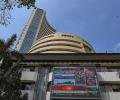
According to data from BSE, the 4,357 companies available for trade had a combined mcap of around Rs 416 trillion on Tuesday against India's GDP at current prices of Rs 296.6 trillion in FY24.
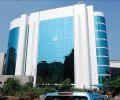
There is a need for further focus and strengthening of guidelines.

The Securities and Exchange Board of India (Sebi) on Wednesday announced a slew of measures to ease the compliance burden in the stock markets ecosystem, encourage more companies to list on the bourses after reverse flipping to India, and facilitate greater foreign fund flows into government bonds.

China has made serious inroads into Latin America, which the US may now be hinting is simply not ok: Stay in your lane, Xi! In simple terms, China will no longer have access to Venezuelan oil, points out Rajeev Srinivasan.

Pakistan on Friday said that the X account of its ministry of economic affairs was hacked and an appeal was posted on it for more international loans to meet the 'heavy losses' caused by the current tensions with India.

Capital markets regulator Sebi has rejected a proposal by the National Stock Exchange (NSE) to extend the trading hours in the equity derivatives segment citing a lack of feedback from the stock brokers community. "Currently, there is no plan to extend the timings as Sebi has returned our application as the stock brokers have not given the feedback that Sebi wanted. "So, as of now, the extended time frame (plan) is shelved," NSE MD and CEO Ashishkumar Chauhan said in a post-earnings analysts call.

Benchmark equity indices Sensex and Nifty settled with marginal gains on Thursday in a highly volatile trade amid the scheduled monthly derivatives expiry and muted trend in the US markets. The 30-share BSE Sensex closed 86.53 points or 0.13 per cent higher at 66,988.44, registering its third day of gains. During the day, it hit a high of 67,069.89 and a low of 66,610.35.

The advance/decline ratio (ADR) - a gauge of market breadth - has remained negative (below 1) for a second consecutive month. In other words, the number of stocks declining is outpacing those rising, as a brutal selloff by overseas investors and lofty valuations weigh on sentiment. According to BSE data, the ADR for October stands at 0.98 for the second month in a row.

'We have done tremendous automation in the stock markets'.

Sundararaman Ramamurthy has assumed charge as managing director and chief executive officer of leading stock exchange BSE. In a regulatory filing last year, BSE said that markets regulator Sebi has approved the appointment of Ramamurthy as its MD and CEO. "Sundararaman Ramamurthy has assumed charge as MD and CEO of BSE," the exchange said in a release on Wednesday.
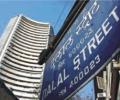
With new eligibility criteria for futures and options (F&O) coming into effect, Jio Financial Services and Zomato are strong contenders for inclusion in the derivatives segment, according to an analysis by Nuvama Alternative & Quantitative Research. The report suggests that these new F&O inclusions could also propel these two companies into the benchmark National Stock Exchange Nifty 50 during the March rebalancing.

Tasting success with the relaunch of Sensex derivatives in the onshore market, BSE is preparing for the 'offshore' debut of its 30-share index, which has become synonymous with the domestic markets. Sources in the know said that the India International Exchange (India INX), a subsidiary of BSE, received approval in July from the International Financial Services Centres Authority (IFSCA) to launch Sensex 30 derivatives contracts.

Leading brokerages have revised their charges with the true-to-label norms by the Securities and Exchange Board of India (Sebi) kicking in from Tuesday.

Notwithstanding the recent sharp decline in the stocks of public sector companies, analysts at Jefferies remain bullish on this segment. State Bank of India, Coal India, and NTPC are their top picks in this space, they said in a recent note. The public sector undertaking (PSU) or state-owned enterprise (SOE) index, with a 70-percentage-point outperformance versus the National Stock Exchange Nifty50 over the past 12 months, comes after a decade of underperformance before 2020.

Maharashtra Congress chief Nana Patole on Monday alleged that the agenda of the upcoming special session of Parliament is to separate Mumbai from the state and declare it as a Union territory.
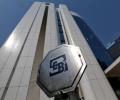
Capital markets regulator Sebi has kept in 'abeyance' the proposed initial share sale of securities depository NSDL. However, the Securities and Exchange Board of India (Sebi) did not clarify further. The National Securities Depository Ltd (NSDL) filed its preliminary papers with the capital markets regulator on July 7.
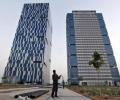
The International Financial Services Centres Authority (IFSCA) has proposed key exemptions to the current listing framework and measures for setting up holding companies (holdcos) and special purpose acquisition companies (SPACs) to encourage domestic startups list at GIFT City, the country's only international financial services centre (IFSC). Under the current framework, to be eligible to list on IFSC exchanges, an issuing company should have operating revenue of at least $20 million in the preceding financial year and average pre-tax profits of at least $1 million during the preceding three financial years. An expert committee has noted these conditions have acted as hurdles to listing new-age companies, and they need a relook.

The biggest losers on the National Stock Exchange's benchmark Nifty 50 index are stocks that have seen the highest turnover over the past 12 months, according a report by Morgan Stanley.

National Stock Exchange, India's biggest exchange by volume, launched its operations with nearly 200 members in 1994. BSE started operations in 1875 with 318 members.

Prime Minister Narendra Modi inaugurates the Navi Mumbai International Airport and a portion of the Mumbai Metro Line, marking significant improvements to transportation infrastructure in Mumbai.

The MF investor count, which stood at around 38 million in April 2023, has surged by 19 per cent in the past year.

Last month, the National Stock Exchange witnessed 'flash crash', when the Mumbai-based brokerage Emkay Global Financial Services sent the exchange index tumbling as much as 15.5 per cent in just a few seconds, creating a panic among traders.

Tata Motors on Monday said the voluntary delisting of its American Depositary Shares, representing ordinary shares, from the New York Stock Exchange will become effective close of trading on January 23, 2023. After Monday, there will be no over-the-counter market trading of the American Depositary Shares (ADSs) in the US due to regulatory restrictions under the Indian law, Tata Motors said in a regulatory filing.

India's fair trade regulator Competition Commission of India (CCI) has launched a formal investigation against India's biggest paints firm, Asian Paints, for alleged abuse of its dominant position in the organised decorative paints market, following a complaint by Aditya Birla group's Grasim Industries' Birla Opus Paints division.

The BSE Sensex has been one of the top-performing areas of investment in the past 40 years, consistently delivering double-digit returns in rupee terms, beating assets such as global equities, precious metals, and fixed income.

The National Stock Exchange (NSE) of India is going to indefinitely defer the internal deadline set for extending trading hours, according to sources in the know. The exchange aimed to introduce a three-hour evening session exclusively for index derivatives by March 2024, contingent upon regulatory clearance from the Securities and Exchange Board of India (Sebi). Sources indicate that the market regulator has not provided a favourable indication, dimming optimism surrounding the proposal.
The stock exchange on which they are traded boasts higher profits than most of the companies whose shares are hitting new highs. Only 37 of approximately 2,000 listed companies with comparable data for 2022-23 (FY23) reported higher profits, while the rest had lower profits. Despite rising corporate profitability, the universe of companies that outperform the National Stock Exchange (NSE) in terms of profitability has been shrinking of late, according to an analysis of companies with comparable data over the past seven years.
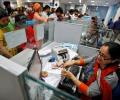
Banks have tightened their cyber security network to ward off any cyber threat in the wake of India launching missile attacks on Pakistan and Pakistan-occupied Kashmir. Banks have also improved their security at the branches near border areas due to heightened threat of a counter attack.

AstraZeneca Pharma India, the Indian subsidiary of AstraZeneca Pharmaceuticals AB, Sweden, has decided to delist its scrip from the Bombay Stock Exchange, National Stock Exchange and Bangalore Stock Exchange.

Framing the next chapter in Swiggy's journey as a responsible corporate citizen, co-founder and chief executive officer (CEO) Sriharsha Majety unveiled the company's eagerly awaited public listing. Majety, who has largely shunned the spotlight, shared reflections on his entrepreneurial path and the strategic pivots he and his co-founders navigated in building Swiggy. "We started with code aggregation, then pivoted to logistics, and that became Swiggy.

The share of Ahmedabad in the total value of trades on both the BSE and NSE is set to touch double digits for the third year in a row.
State-run Coal India on Wednesday toppled billionaire Mukesh Ambani-led Reliance Industries as the country's most valued company, with a slightly higher market valuation around mid-day.

Mutual funds (MFs) reinforced their record monthly inflows in October with an investment of Rs 87,000 crore (up to October 29), softening the downside pressure on domestic markets. Their prior record for monthly inflows was Rs 48,139 crore in May. This unprecedented monthly buying partially countered record monthly sales by foreign portfolio investors (FPIs) of Rs 1.1 trillion last month.

Stocks in the automotive, financial, cement, metal, and hotel sectors are likely to benefit if the Narendra Modi-led Bharatiya Janata Party (BJP) comes back to power for a third time. The key investment themes have been identified after analysing the Sankalp Patra - the party's manifesto for the next five years - released on Sunday.

The National Stock Exchange (NSE) on Thursday warned investors not to fall prey to investment schemes with assured returns offered by Sameer Gulabrao Thite associated with Samsan Unitrade. The exchange pointed out that the person and the entity are not registered either as a member or authorised person of any registered member of the NSE. The cautionary statement comes after the NSE noticed that Sameer Gulabrao Thite associated with Samsan Unitrade was offering the service to handle trading accounts of investors by asking them to share their user identification (user ID) and password.

The move is meant to curb or reverse the export of India's financial markets to overseas trading platforms.
List of disappearing entities could see additions, for first time in 20 years.
Mahindra Holidays and Resorts India Limited's stock got listed on Thursday on the National Stock Exchange and its price opened 5 per cent higher at Rs 315 over the issue price of Rs 300.
